Aluminum sheet metal is used everywhere in fabrication. It’s light, strong, and easy to shape, because it cuts cleanly and bends without losing strength. It also resists rust, which makes it reliable for parts that face weather or heat.
In fabrication, aluminum gives a mix of strength and flexibility. It works well for panels, housings, brackets, and covers. It’s also used when a part must look good and stay strong. The process takes skill. Each step, such as cutting, forming, welding, and finishing, must be precise to keep tight tolerances and a smooth surface.
Aluminium Billets
At Apexrapi, we work with aluminum sheets every day. Our team builds both prototypes and low-volume production parts. We use advanced(new-generation) machines and check each part for accuracy and finish. From design to final inspection, our goal is to make aluminum parts that perform and last.
This article looks at how aluminum sheet metal is used in fabrication, its main benefits, and how our team helps engineers turn designs into strong, high-quality products.
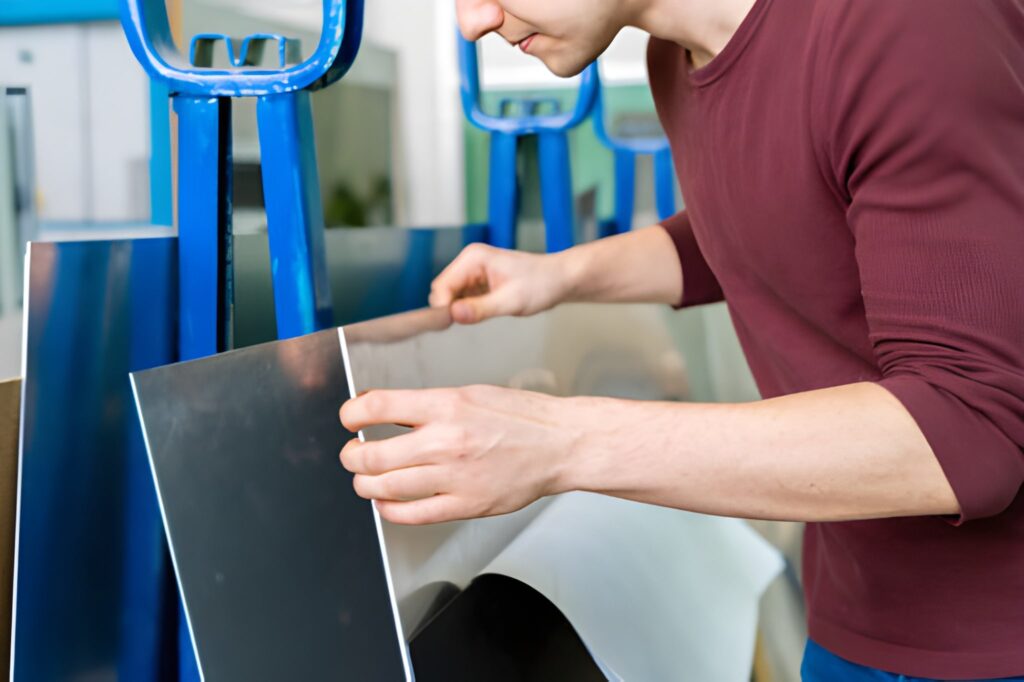
Aluminium Rollers In Factory Storage
The art of converting flat sheets of aluminum to a completed product is called aluminum sheet metal fabrication. It entails several processes: cutting, bending, welding, and finishing the surface. The process of every step should be strictly regulated to ensure accuracy and quality.
The process normally starts with selecting materials. The engineers select the appropriate grade of aluminum depending on the project requirements, strength, corrosion resistance, or surface finishing.
After selection, the sheet is then cut to size by using techniques such as laser cutting or waterjet cutting, or CNC machining. The planned pieces are then bent or formed by bending operations so as to obtain the desired geometry.
Once the form is established, the parts are assembled by different joining methods like welding, riveting, or fastening. Due to the fact that aluminum is a good heat conductor, it is necessary to control it well during welding to prevent distortion or cracking. Treatments such as anodizing, powder coating, or polishing are also used to finish the surface and enhance the appearance.
At Apexrapid, we take care of all processes of aluminum sheet metal fabrication. Our machinery is sophisticated, and we make sure that every part is of the required specifications. Even when it comes to a prototype or a small production run, we center on standard quality in every work that we produce.
The manufacturing of aluminum sheet metal involves a combination of cutting, forming, and joining. All the techniques have a certain purpose of processing raw aluminum sheets into usable components. The aim is to ensure perfection, hardness, and surface finish are maintained.
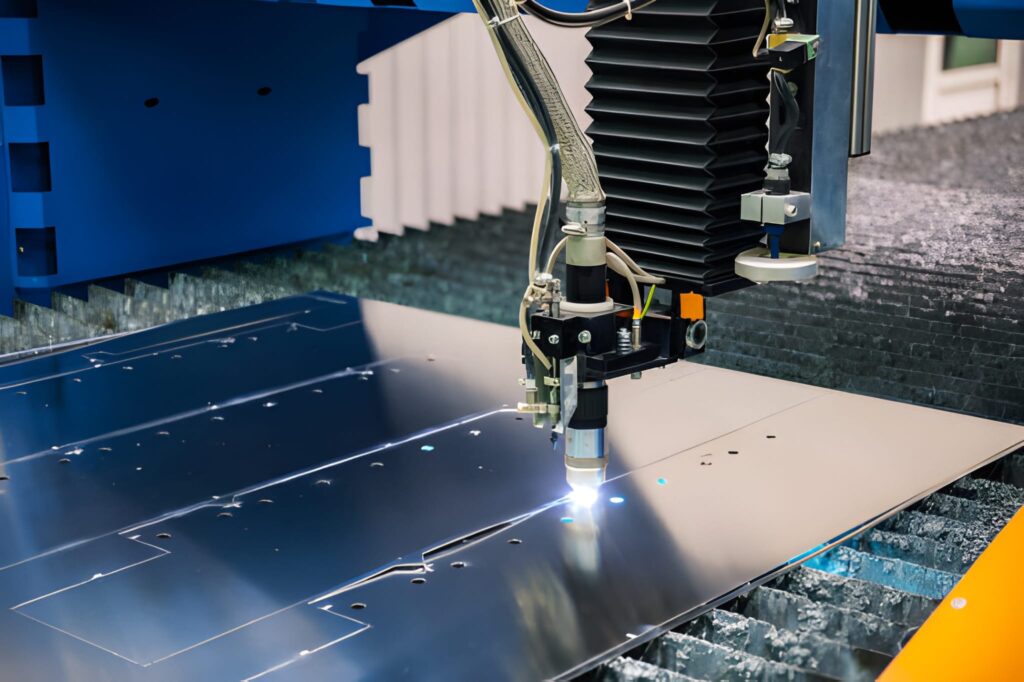
Aluminum Sheet Laser Cutting
Laser cutting involves the use of a high-energy beam that is narrow and cuts through aluminum. It provides smooth edges and tolerances. The process is appropriate for complicated profiles that require precision. No physical contact is made, and so the material does not distort. It is a good choice when needed in small parts and details on the sheet.
Waterjet cutting involves the use of high pressure stream of water mixed with abrasives to cut aluminum. It is heat-free and therefore the sheet retains its original strength. This is a sure way of using thick aluminum plates or parts that need fine edges. Commonly, heat distortion is not allowed or edge burning.
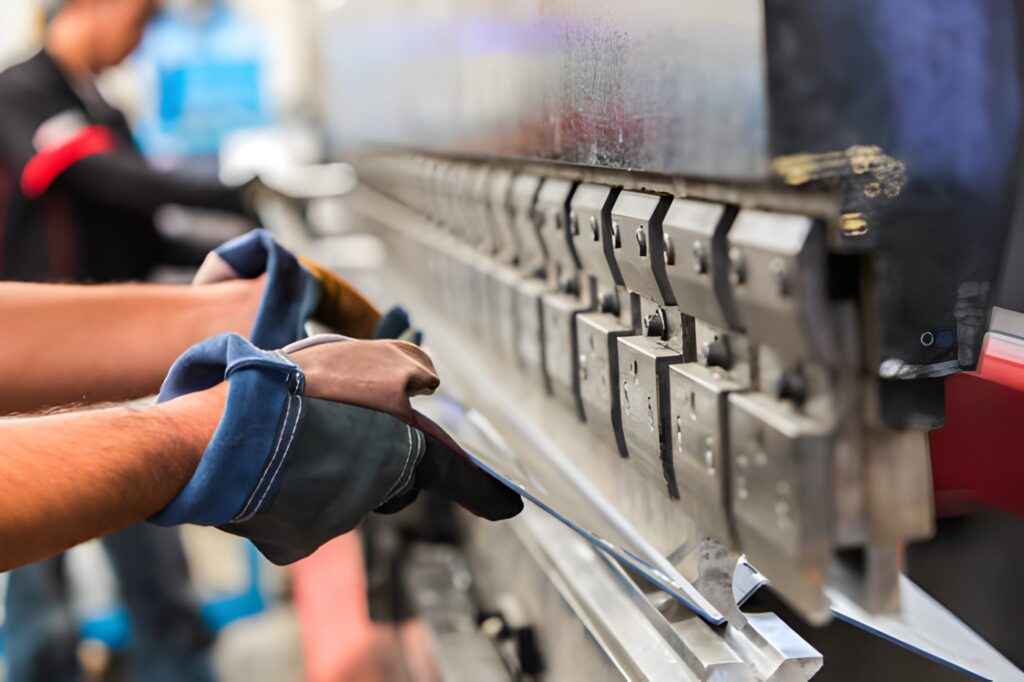
CNC punching creates holes, slots, and patterns by means of a punch and die system. It is quick and repeatable and does well when there is a large amount of production. The procedure is most effective with aluminum panels on ventilation, control boxes, and electronic housings. It is effective, accurate, and ensures low wastage.
Sheet Metal Bending
Bending is a process that converts the flat sheet into angles or curves with the help of press brakes or rollers. It is among the forming operations that are most widespread. This is achieved by having the bend radius under control to avoid cracking. Frames, panels, and covers are made to be stiff and shaped with formed parts.
Welding is a process of making one structure out of aluminum fragments. The most frequent ones are TIG and MIG welding. During welding, aluminum has to be carefully heated since it is an extremely fast conductor of heat. Well-set joints require clean surfaces and stable technique. It is applied in enclosures, machine frames, and vehicle structures.
Riveting involves joining metal, where the metal is not melted. It is an operation that is mechanical and enables it to be strong and disassembled. Such fasteners as bolts and screws are applied where a repair or check-up might be required. The technique is common in aerospace and automotive industries to ensure assemblies are light but strong.
Metallic Gradient Finish
Surface finishing is used to enhance durability and appearance following shaping and assembly. Aluminum is typically anodized- A hard, corrosion-resistant layer is formed. Color and texture are also achieved using powder coating and polishing. These finishes are wear-resistant and have a professional appearance.
Aluminum sheet metal is formed into numerous useful components, which are applied in industries all created to be strong, lightweight, and non-corrosive.
They are constructed to protect electrical and control components against dust, heat, and vibration. Aluminum is simple to cut and bend; therefore, it is suitable for small or large box designs. It is light, it will not rust, and it aids in the conduction of heat out of the parts within it. This is why it is usually used in control cabinets, sensor housings, and outdoor devices.
Metal Brackets Parts
Parts are held or supported by brackets within machines, panels, or frames. Aluminum is powerful enough to do the task, but it is significantly lighter than steel. It machines and drills easily as well, hence it consumes less time in setting up or assembling. These brackets can be found in automobiles, hospital devices, and shop implements.
Machines and enclosures are terrifically covered or face panels using flat aluminum sheets. They seal out dust and insulate moving components together while providing the product with a clean finish. All these sheets are punched or cut to displays, buttons, or ports. The surface remains clean years after use.
Many products, large and small, are structured around the frame or chassis - electronics and heavy machines. Aluminum is effective in this case since it remains rigid and yet does not increase the weight. It has also been found to be a good welder and bolster, and this is used to produce assemblies that are strong yet easy to move around.
Ventilation or HVAC systems are made using ducts and vent plates made of aluminum sheet. It is light and simple to shape and does not rust, making the air clean and flow uninterrupted. The sheets are normally curved and folded together according to the system design.
Cladding Panels
In the case of buildings, the aluminum sheets are molded into exterior cladding panels. They also make walls smooth and modernized, as well as shielding them against rain and sun. Aluminum withstands weather and could be painted or anodized to suit any design. It is popular with new constructions and remodeling.
Fabrication of aluminum sheet metals is not very expensive, although it varies depending on a number of factors. Even aluminum is a less expensive material than some of the more specific metals, such as titanium or stainless steel. It is also less heavy, and this saves on the cost of transportation and handling. Nevertheless, overall pricing remains determined by sheet thickness, complexity of design, and the nature of the finish to be used.
Processes such as CNC cutting, bending, and welding may be able to increase cost when tight tolerances or multiple operations are required. Surface treatments like anodizing or powder coating, which are of high quality, also add a little more to the price.
We manage to maintain low costs at our in-house factory through cutting paths optimization, reduction of waste, and low-volume production setups. This will assist the customers in obtaining long-lasting aluminum components without spending excessively.
Aluminum Sheets
The manufacturing of the sheet metal aluminum pieces requires expertise, design, and detailing. Every process within the process is important. The appropriate strategies will contribute to the minimization of waste, enhance accuracy, and ensure that the parts are of the necessary quality. We have several practices that we employ to ensure that we achieve optimal outcomes in all the projects.
Raw Aluminum Alloy
The first step is the selection of the correct alloy. The grades such as 5052 and 6061 are very popular since they are powerful and can be easily shaped. It is a decision on what the part will be doing. Some alloys bend well, those that are welding or machining. Learning about such variations aids the engineers in achieving an improved equilibrium of strength and workability.
Clean dies and sharp tools are very important in fabrication. A dull or damaged tool will create marks or cracks on the sheet. It is also important to bend the radius in a proper way so as to avoid tearing. Apexrapid machines are always checked and adjusted before cutting or bending to make sure that they are consistent.
Aluminium may become hot during cutting and welding. Excessive heat will lead to distortion or sharp edges. The right coolant and maintaining a constant temperature save the surface and the shape. It also increases the life of the machining tools.
Constant calibration of machines maintains machines. The faintest vibration or misalignment may alter the ultimate size or shape of the piece. The sheet is held by stable fixtures that ensure the sheet does not move during forming or cutting. This maintains low tolerances and minimizes rework.
Finishing keeps the aluminum free of corrosion and enhances the appearance. The most common options are anodizing, polishing, and powder coating. Both finishes are of varying degrees of durability and shine. Finishing also benefits the parts to work well in outdoor or high-wear conditions.
Inspecting every production step is one of the ways to identify problems on time. Dimensions, bend inspection, and surface quality checks ensure that erroneous judgments are avoided in the future. Apexrapid, we have a vigilant eye when it comes to the fabrication to ensure that all the aluminum parts produced in the company are up to the expected standards.
Aluminum sheet metal fabrication offers light weight, strength, and corrosion resistance. It is used widely in automotive, aerospace, and industrial parts. The process includes cutting, bending, forming, and finishing, all done with precision.
The cost depends on design and finish, but aluminum is easier and more affordable to work with than many metals. Choosing the right alloy, using sharp tools, and keeping machines stable ensure accurate results. Finishing methods like anodizing or powder coating improve durability and appearance.
At Apexrapid, we focus on quality, precision, and cost efficiency. Our team uses proven techniques to produce reliable aluminum sheet metal parts for any application.

HDPE VS. PP: Strength, Machinability, and Applications

Brass Vs Copper for CNC Machining: Which Material Is Best

CNC Plastic Machining: Plastic Selection, Machining Processes & Key Applications

Deep Hole Drilling: What It Is & How It Is Done?

Rapid Prototyping: All About Process, Techniques, Pros & Challenges & More

All-Inclusive Guide to Laser Cutting Aluminum