Many applications may find it difficult to decide between HDPE and polypropylene. Both are popular and provide excellent performance, although when the wrong material is chosen, it influences the strength, flexibility, and durability of the product.
Knowing the main distinctions between these two thermoplastics can assist in making the right decision. Polypropylene provides higher stiffness and better heat resistance, while HDPE offers higher impact strength and toughness.
HDPE delivers superior impact strength and toughness, whereas polypropylene offers greater stiffness and enhanced heat resistance. Each material is appropriate to certain manufacturing methods and final uses.
Proper material choice enhances the performance and reliability of products. HDPE is used in piping, tanks, and containers, and polypropylene is used in packaging, textiles, and heat-resistant components. Both are lightweight, food-safe, and can be used in high-volume parts production.
At Apexrapid, our team assists you in selecting the correct plastic material to use. The expert help and high-level production capacity are used in creating each component to suit your specific demands.
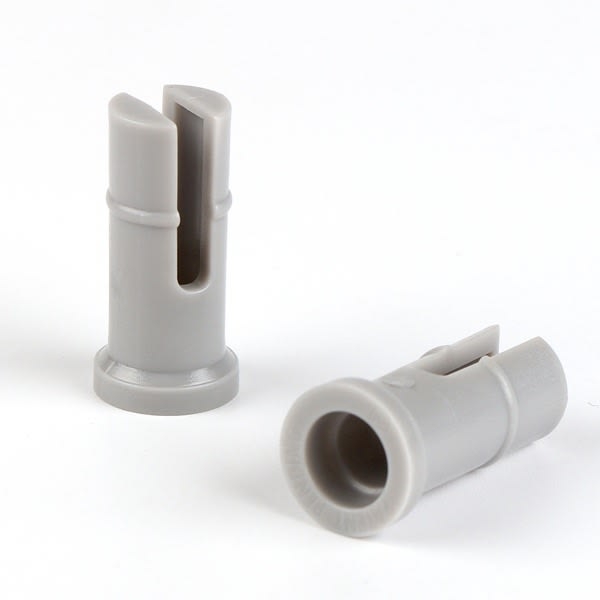
Polypropylene (PP) CNC-machined parts
Polypropylene (PP) is a semi-crystalline thermoplastic that is obtained by polymerization of propylene monomers using catalytic processes.
It is normally offered in two types: homopolymer (widely used) and copolymer (with better impact resistance). The material is subjected to the pellets and molded by injection molding, blow molding, extrusion, and CNC machining.
PP is also reputed to be versatile and can be shaped in various forms and patterns. It is common in food containers, caps, fabric, and chemical storage systems. Its flexibility enables it to fit in simple and complex manufacturing.
Polypropylene has good fatigue strength, chemical resistance, and cost efficiency in terms of performance. It is efficient in systems that involve repeated stress or movement. Polypropylene is a stable and versatile substance, balancing functionality, price, and ease of production across a broad spectrum of industrial and commercial applications.
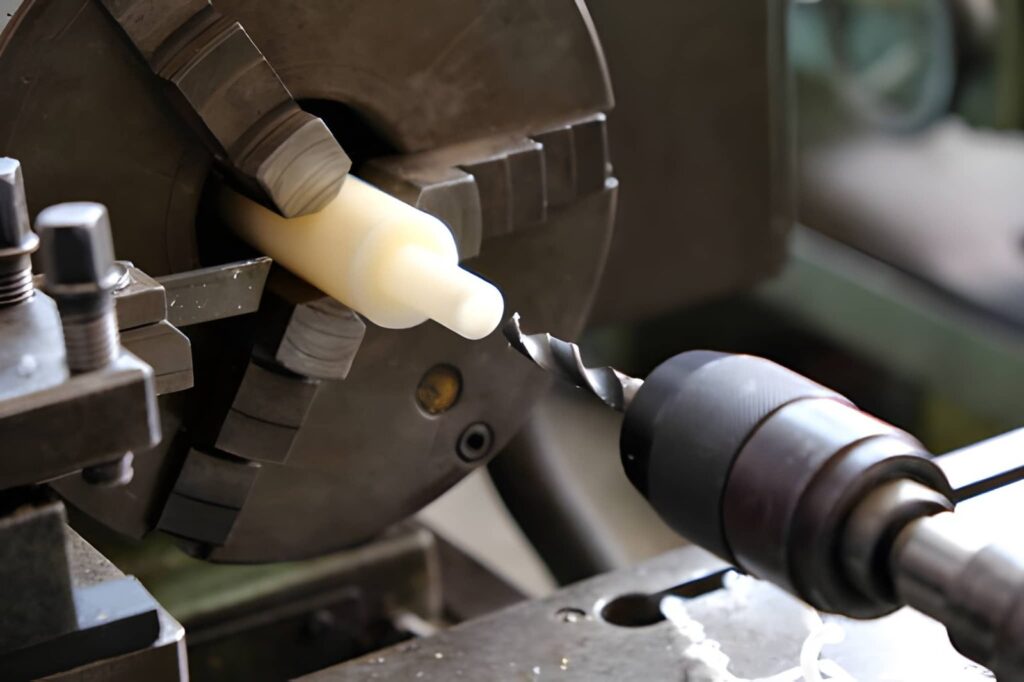
HDPE machining
HDPE is a thermoplastic polymer that is produced using ethylene, which is a petroleum-based product, by using a controlled polymerization process. The molecular structure is simple with little branching, making it strong and durable. Once manufactured, it is rolled into pellets and processed through extrusion, injection molding, rotomolding, and CNC machining.
HDPE belongs to the polyethylene family that consists of LDPE, LLDPE, and UHMWPE. It has a great strength-to-weight ratio and is common in water tanks, piping, food packaging, and containers. Plastic welding can also be utilized in joining to achieve solid assemblies.
HDPE is also characterized by its ability to maintain performance and better chemical resistance, which makes it suitable for harsh environments.
The unique chemical structure of HDPE and polypropylene, and how the structure affects their performance and usage, is mentioned below:
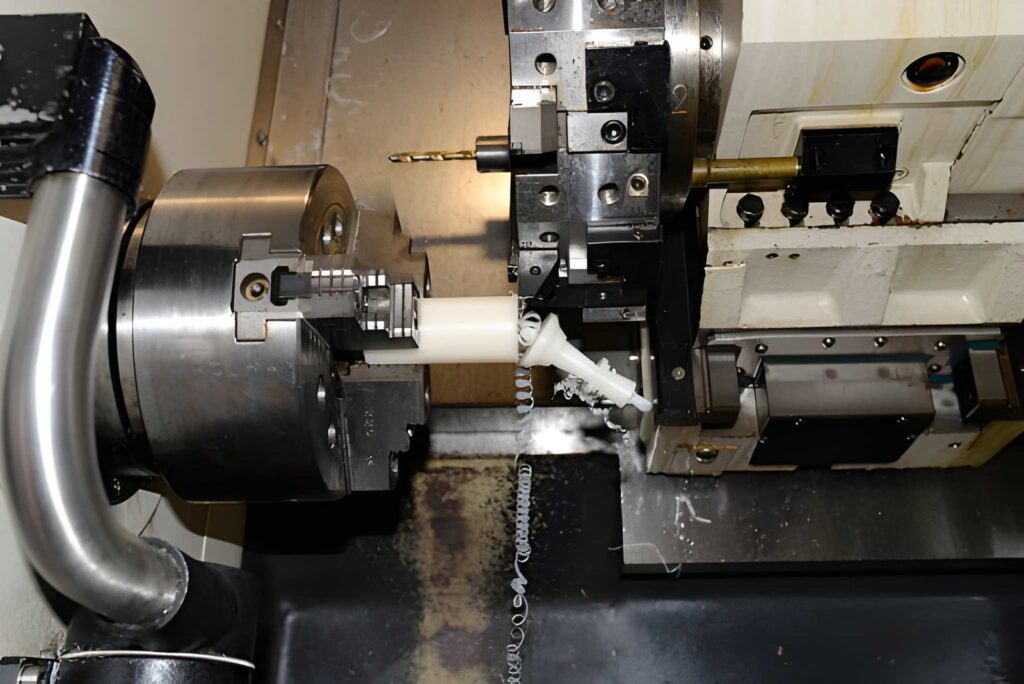
CNC plastic cutting
The chemical formula of HDPE is (C₂H₄)ₙ, composed of two carbon and four hydrogen repeats. It has a linear, non-branched, molecular structure such that the chains are tightly packed. This close arrangement makes HDPE strong, stiff, and dense.
The chemical formula of Polypropylene is (C₃H₆)ₙ, where repeating units comprise three carbon and six hydrogen atoms. It has a semi-crystalline structure with slight methyl (CH3) branching. This minimizes the packing density relative to HDPE but enhances flexibility and heat resistance.
The linear structure of HDPE increases density and impact strength. The methyl side groups in PP restrict chain movement, increasing stiffness and heat resistance.
Physical and mechanical distinctions between the two materials are highlighted as:
Polypropylene clamps
HDPE weighs more with a density (0.92-0.96 g/cm3) than PP. Polypropylene weighs less, with a density of 0.85-0.90 g/cm3, which is good in weight-sensitive applications.
HDPE has a greater tensile strength of approximately 31.7 MPa, and it has outstanding resistance to tough applications. Polypropylene has a lower tensile strength of approximately 23.4 MPa, although it is still good for general use.
HDPE is tougher and resists cracking under impact. Polypropylene is stiffer but becomes brittle at low temperatures.
HDPE has superior impact strength, especially at cold temperatures. Polypropylene is weaker in impact strength but can be enhanced through additives or alterations.
The two materials are similar in hardness, with the polypropylene a little higher in Shore D 72 than the HDPE in Shore D70.
Polypropylene can withstand heat better because of its higher melting point (160-168 °C) and is appropriate in hot temperature applications. HDPE melts at lower temperatures (130-137 °C) but works well at moderate temperatures.
Both materials are highly chemically resistant. Polypropylene is resistant to acids, alcohols, and bases, whereas HDPE is resistant to acids, reducing agents, and certain oxidants.
Both HDPE and polypropylene are low in natural UV resistance and might need stabilization to be used outdoors.
Polypropylene absorbs less water at approximately 0.02 %, whereas HDPE absorbs a little more at approximately 0.01-0.1%. Both are acceptable in moisture-sensitive places.
PP ≈ 1300–1800 MPa, HDPE ≈ 800–1200 MPa. This explains why PP is stiffer than HDPE.
Low cost, durability, and easy processing are some of the reasons behind the popularity of HDPE and polypropylene. The materials have particular uses depending on their properties.
The decision to select HDPE or polypropylene is one that is based on your application requirements, performance requirements, and budget.
HDPE is superior in high load and impact resistance. Polypropylene is applicable in areas that require flexibility and minimal movement.
HDPE is used in moderate temperatures. Polypropylene is better suited to high-heat conditions and hot applications.
Polypropylene is also lighter and is a wise option in weight-sensitive designs. HDPE is a little heavier but has additional strength.
Polypropylene offers better transparency than HDPE. Polypropylene tends to be more transparent.
Polypropylene and HDPE require UV stabilizers for long-term outdoor applications.
Costs of HDPE and polypropylene are fairly equal, with only minor differences depending on grade and market.
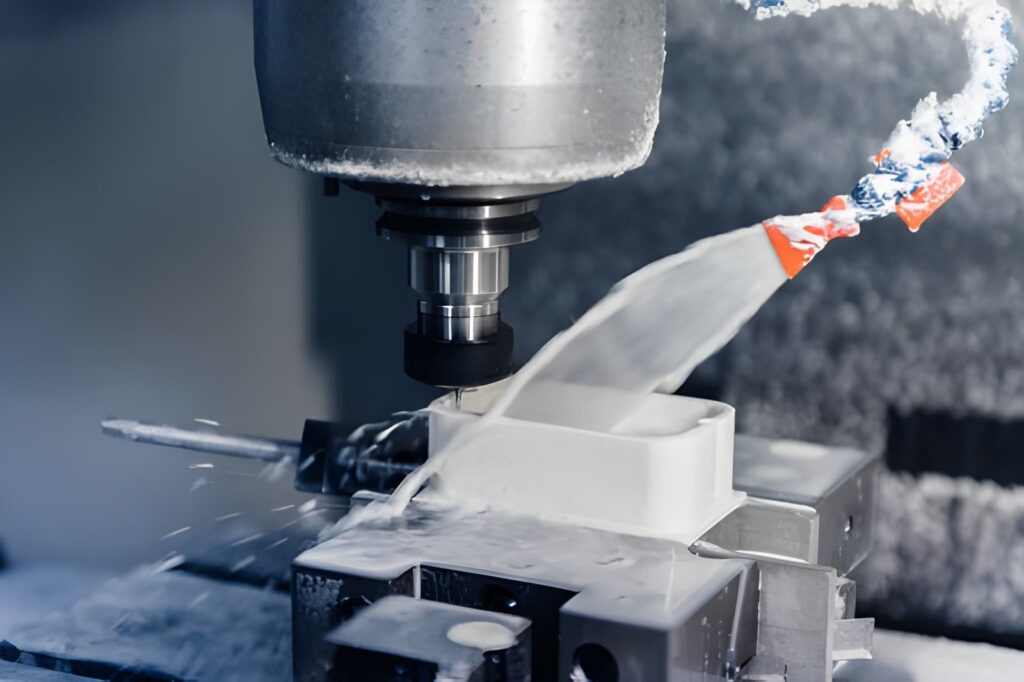
CNC milling PP box
HDPE can also be processed at reduced temperatures, and this can save energy. Nevertheless, the total cost is determined by design complexity and volume of production.
HDPE is highly resilient and can save on replacement and maintenance expenses in the long term.
HDPE is softer and does not crack when stressed. Polypropylene is stiffer and retains its form.
HDPE has superior impact performance, particularly at lower temperatures. Unless modified, polypropylene has lower impact resistance.
HDPE can be used outdoors because it is resistant to UV. Polypropylene needs additives to be used in long outdoor applications.
HDPE works with a wide variety of chemicals, such as cleaning products and detergents. Polypropylene is resistant and responds well to many chemicals. HDPE performs better with strong oxidizers, while PP handles acids and bases well.
CNC-machined gears
| Property / Feature | HDPE (High-Density Polyethylene) | PP (Polypropylene) | PVC (Polyvinyl Chloride) | XLPE (Cross-Linked Polyethylene) |
| Use 3D printing when internal channels, enclosed cavities, or frequent design edits make machining setups inefficient. | (C₂H₄)ₙ; linear, non-branched | (C₃H₆)ₙ; semi-crystalline, slightly branched | (C₂H₃Cl)ₙ; polymer with chlorine substitution | (C₂H₄)ₙ; cross-linked polymer structure |
| Use 3D printing when internal channels, enclosed cavities, or frequent design edits make machining setups inefficient. | 0.94–0.97 | 0.85–0.91 | 1.3–1.45 | 0.92–0.95 |
| Use 3D printing when internal channels, enclosed cavities, or frequent design edits make machining setups inefficient. | 130–137 | 160–168 | 75–105 (softening range) | Does not melt; withstands up to ~200–250°C |
| Use 3D printing when internal channels, enclosed cavities, or frequent design edits make machining setups inefficient. | 20–37 | 23–34 | 34–55 | 20–35 |
| Use 3D printing when internal channels, enclosed cavities, or frequent design edits make machining setups inefficient. | 0.7–1.0 (notched, ambient) | 4–5 (notched) | 1–2 | 2–6 (enhanced toughness) |
| Use 3D printing when internal channels, enclosed cavities, or frequent design edits make machining setups inefficient. | 800–1200 | 1300–1800 | 2800–3600 | 900–1500 |
| Use 3D printing when internal channels, enclosed cavities, or frequent design edits make machining setups inefficient. | 600–1000 | 200–500 | 50–100 | 300–800 |
| Use 3D printing when internal channels, enclosed cavities, or frequent design edits make machining setups inefficient. | Continuous: 60–80°C; short-term: 100°C | Continuous: 90–120°C; short-term: 140–160°C | Continuous: 60–70°C; short-term: 80–85°C | Continuous: 90–120°C; short-term: 150–200°C |
| Use 3D printing when internal channels, enclosed cavities, or frequent design edits make machining setups inefficient. | Heat fusion, extrusion, injection molding, and CNC machining | Welding, extrusion, injection molding, blow molding | Solvent cement, extrusion, and injection molding | Limited welding; extrusion before crosslinking, compression molding |
| Use 3D printing when internal channels, enclosed cavities, or frequent design edits make machining setups inefficient. | 50–100 years | 30–50 years, depending on stress | 25–30 years | 50–100+ years; superior resistance to heat, chemicals, and cracking |
| Use 3D printing when internal channels, enclosed cavities, or frequent design edits make machining setups inefficient. | Water/gas pipes, storage tanks, geomembranes, consumer goods | Food packaging, automotive parts, industrial components, textiles | Pipes, conduits, fittings, drainage, cable insulation | Power cable insulation, high-temperature piping, plumbing, and industrial systems |
| Use 3D printing when internal channels, enclosed cavities, or frequent design edits make machining setups inefficient. | Moderate | Moderate | Low | Higher than HDPE; premium for high-performance applications |
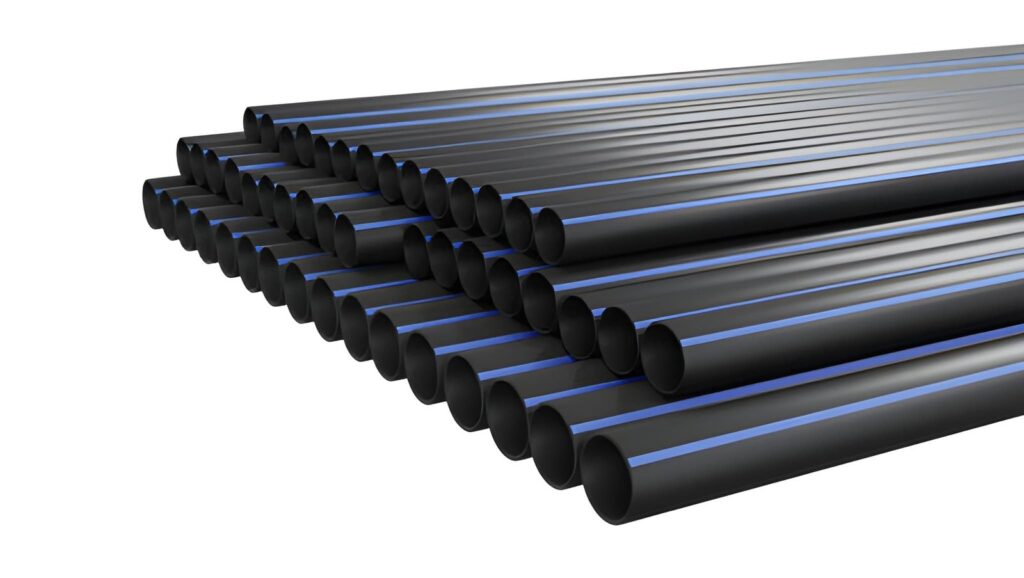
HDPE stacked pipes
HDPE is tough, soft, and incredibly chemical resistant, and applies to:
PP sheet CNC machining
Polypropylene is heat-resistant, stiff, and versatile. It can be used in:
Although there are common applications between the two materials, HDPE is used in preference for strength and flexibility, whereas polypropylene is used in preference for heat resistance and rigid applications.
HDPE and polypropylene are each characterized by distinct advantages that enable them to be used in particular applications. HDPE is strong, flexible, and resistant to chemicals and is suitable for piping, tanks, and storage solutions of large size.
Polypropylene is also unique in its ability to be heat resistant, rigid, and versatile, which makes it ideal in packaging, automobile, and industrial parts. PVC is affordable, rigid, and can be used in standard piping and fittings, but IDPE is more durable and resistant to chemicals and high-stress conditions. Understanding these distinctions will guarantee the appropriate content is adopted to work, sustainability, and productivity in any project.
HDPE is the best when you require a material that is both strong and chemically resistant. Polypropylene (PP) is more suitable when the application demands heat resistance and flexibility. Selecting the appropriate plastic guarantees long-term, robust, and resistant outcomes.
Polypropylene and HDPE can be substituted by PET (polyethylene terephthalate) and PVC (polyvinyl chloride). PET is used for bottles and packaging, but is not suitable for living hinges. PVC has good thermal and chemical resistance, so it can be used in both rigid and flexible applications, such as tubing and piping.
Rigid HDPE and PP packaging are frequently downcycled into other products such as tubes, fences, and bins, where color and odor are less important. Nonetheless, others yield high-quality color-sorted recyclates in closed-loop systems. The HDPE bottles, in particular, white and natural flakes may be recycled and reused as packaging in food and cosmetic products with high-quality standards.

Brass Vs Copper for CNC Machining: Which Material Is Best

CNC Plastic Machining: Plastic Selection, Machining Processes & Key Applications

A Complete Guide to Aluminum Sheet Metal Fabrication

Deep Hole Drilling: What It Is & How It Is Done?

Rapid Prototyping: All About Process, Techniques, Pros & Challenges & More

All-Inclusive Guide to Laser Cutting Aluminum