Many think that CNC machining is only applicable for plastics. Well, that's true; it is primarily employed for metals, but certain engineered-grade thermoplastics can be precisely machined into useful products.
Plastics also come at a lower cost than most metals. However, it's important to consider your part application before choosing between plastics. There are various engineered plastics compatible with machining today.
Generally speaking, manufacturers often face challenges when producing plastic parts with tight tolerances and complex designs. These issues increase scrap rates and drive up production costs.
Plastic CNC machining addresses these problems through precise, computer-controlled processes. It delivers consistent dimensions, clean surface finishes, and reliable accuracy across prototypes and production runs. This renders it a reliable choice of functional plastic components.
CNC Plastic machining offers lightweight, cost-effective materials for a wide range of applications. You can choose plastics based on strength, thermal stability, or chemical resistance. This flexibility allows better material matching for each specific use.
Apexrapid provides plastic CNC machining services focused on repeatable quality. We machine a wide range of engineering plastics using controlled processes and proven tooling. This article looks into the best plastic materials employed for CNC machining, revealing their unique properties and applications.
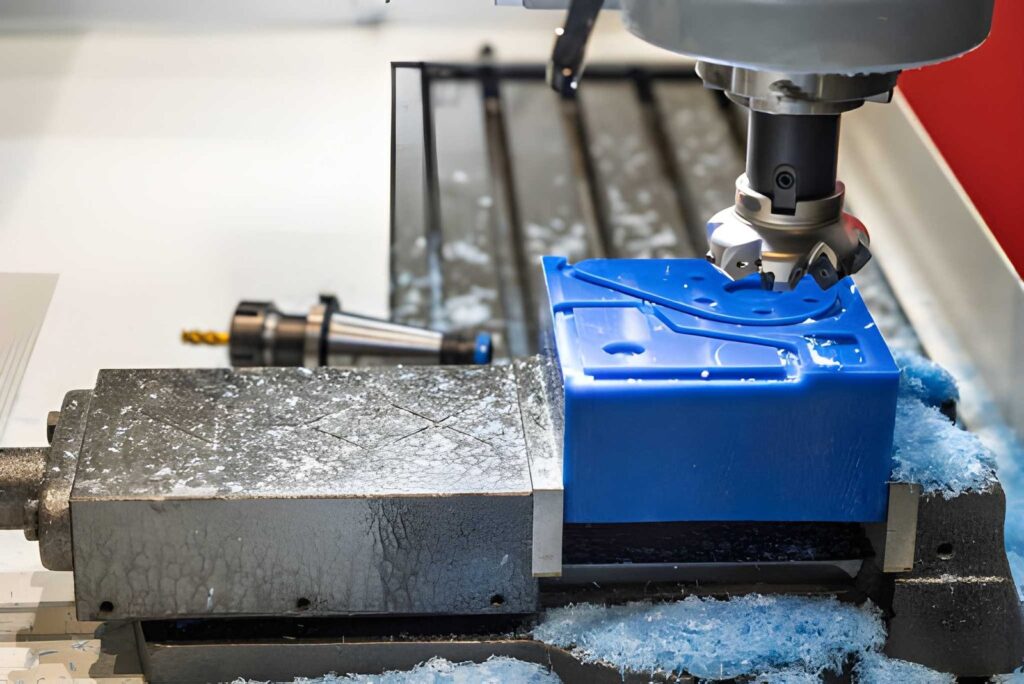
Plastic milling machining
Plastic CNC machining involves the use of computer-controlled tools to cut plastic material into complex, high-precision parts. It is based on programmed instructions to guide the cutting, drilling, and milling process. It removes variation in quality controlled through automation and provides reproducible results every time.
CNC Plastic machining focuses on reducing production time without compromising quality. It helps in rapid prototyping and manufacturing of components. Although CNC technology applies to a wide variety of materials, plastic CNC machining is a technology that meets the special machining requirements of plastic components.
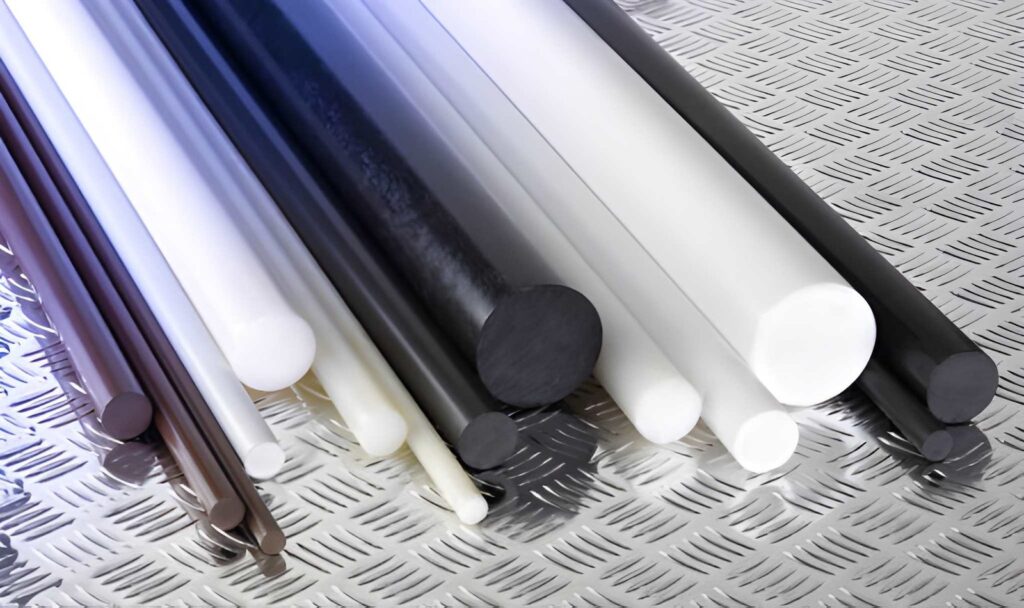
Plastic rods for machining
CNC machining with plastics has been quite common since there are obvious practical benefits compared to other materials.
Plastic CNC machining is compatible with a great variety of materials, and each one has obvious functional advantages. The selection of the appropriate plastic is based on the performance requirements, the environment, and part design.

Acrylic (Pexiglass) sheets for machining
Acrylic or PMMA is a waterproof and crystal-clear transparent plastic. It can be used with CNC milling and routing to create fine, detailed parts, but special attention is required to avoid cracking.
PEEK is a high-performance plastic that is great in terms of strength, chemical resistance, and heat tolerance. It is costly and necessitates special CNC equipment, yet it produces strong and accurate components.
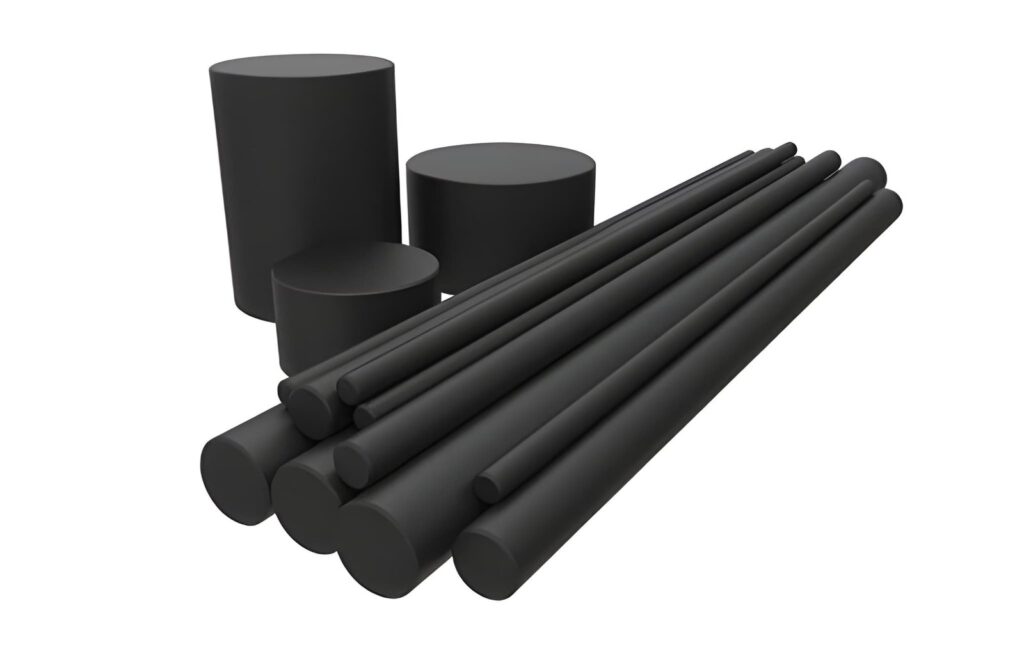
ABS rods for machining
ABS is a multi-purpose thermoplastic that is strong, rigid, and has an impact-resistant nature. It is simple to machine using CNC milling, turning, or routing, and offers smooth, glossy finishes on prototypes.
HDPE is stiff, lightweight, and has good impact resistance. It is easy to machine and, consequently, is good for simple, cost-effective parts, although it cannot be used in high temperatures.
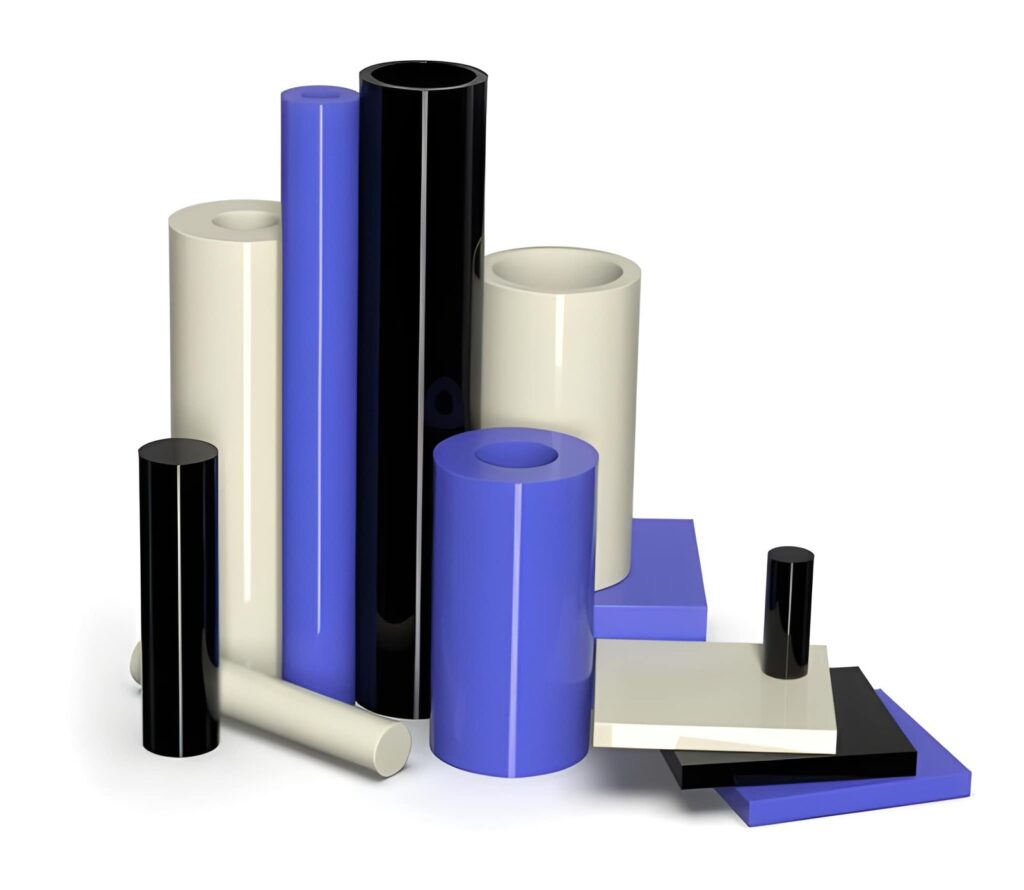
Nylon plastic for machining
Nylon is a high-strength, flexible, and wear-free material. It is machinable but has the ability to absorb moisture, hence precautions are taken to ensure performance and dimensional stability.
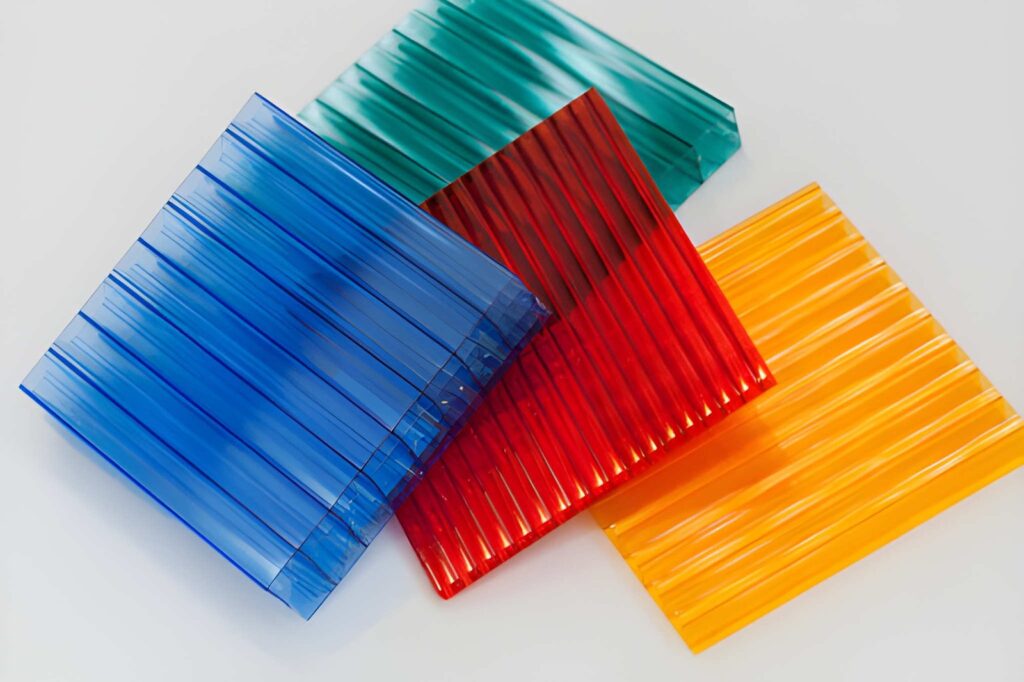
Polycarbonate hollow sheets
Polycarbonate is a transparent, impact-resistant, and strong plastic. It cuts without difficulties into protective covers, electronics, and medical equipment, but needs to be handled to prevent scratching or cracking during cutting.
This polymer belongs to the polyvinyl family. PVDF is very chemically resistant and is structurally stable in harsh environments. It is best in processing chemicals and pharmaceutical parts.
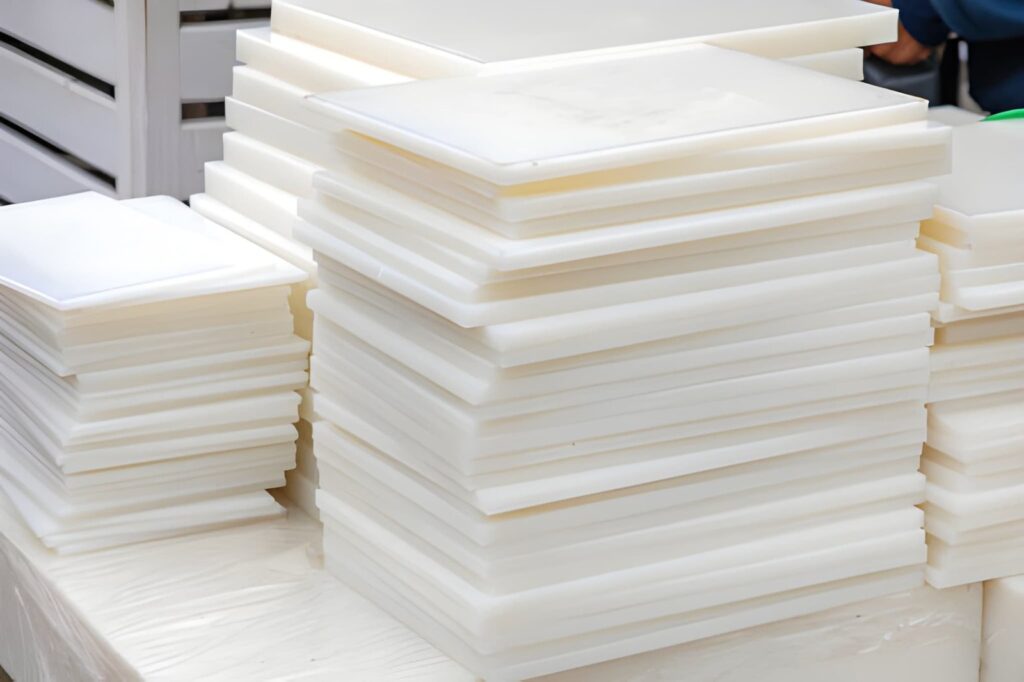
Polypropylene sheets
It is lightweight, tough, and resistant to chemicals. It cuts easily, although caution must be taken on high-speed cuts, where it will warp or crack. Therefore, polypropylene is employed where there is a flexible, medium-strength component.
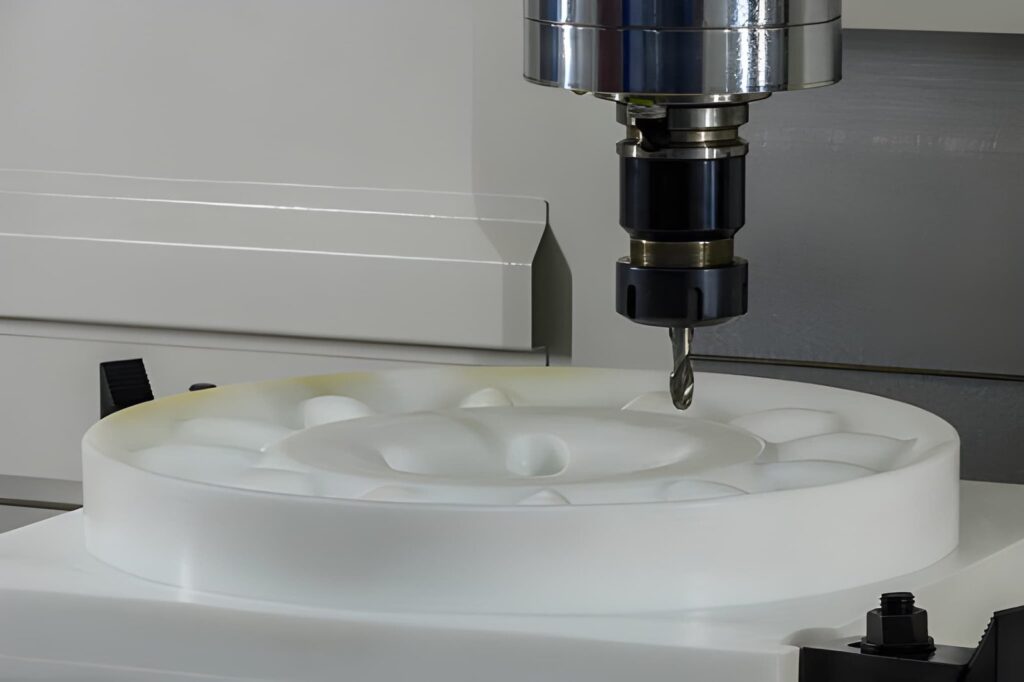
Acetal milling using a solid ball nose end mill tool
Acetal or POM is a powerful, rigid, and low-friction plastic that is suitable for creating accurate components such as gears and bearings. It cuts well with a narrow tolerance and is appropriate for machine-moving components.
Polyethylene is simple to machine, durable, and flexible, making it suitable for the high-volume assembly of basic parts. HDPE is stronger, but has low thermal resistance and cannot be used in high-temperature applications.
PVC is relatively cheap, tough, and resistant to chemicals. It can machine pipes, fittings, and general-purpose components and is therefore suitable for low- to medium-volume production.
PTFE is heat-resistant, chemically resistant, and non-stick plastic. It is difficult to machine, and is special-tooled, but is superior in sealing and high-chemical.
UHMW is highly hard and wear-resistant and can be used in parts that are in constant contact. CNC machining plastic needs attention in order to ensure surface defects are avoided, and thus is best suited for liners, gears, and medical components.
Custom CNC plastic machining allows precise cutting, shaping, and finishing of these plastics. Here's a quick chart to understand materials at a single glance.
| Feature | Chemical Resistance | Tensile Strength (MPa) | Heat Deflection Temperature (HDT) | UV Resistance |
| Acrylonitrile Butadiene Styrene (ABS) | Moderate | 40 – 60 | 90°C – 100°C | Moderate |
| Polycarbonate (PC) | Moderate | 60 – 70 | 130°C – 135°C | Moderate |
| Acrylic (PMMA) | Low | 70 – 110 | 85°C – 100°C | Poor |
| Acetal (POM) | Moderate | 60 – 70 | 90°C – 100°C | Good |
| Polyetheretherketone (PEEK) | Excellent | 90 – 100 | 160°C – 260°C | Excellent |
| Polytetrafluoroethylene (PTFE) | Excellent | 20 – 30 | 260°C – 327°C | Excellent |
| Polyvinyl Chloride (PVC) | Moderate | 50 – 60 | 75°C – 80°C | Poor |
| Polyethylene (PE) | Moderate | 20 – 40 | 65°C – 80°C | Good |
| Polypropylene (PP) | High | 30 – 50 | 100°C – 110°C | Moderate |
| Nylon (PA) | Moderate | 80 – 100 | 100°C – 150°C | Poor |
| Ultrahigh Molecular Weight Polyethylene (UHMW) | Excellent | 30 – 50 | 80°C – 100°C | Excellent |
| Polyvinylidene Fluoride (PVDF) | Excellent | 35 – 55 | 140°C – 150°C | Good |
| High-Density Polyethylene (HDPE) | Moderate | 30 – 40 | 60°C – 80°C | Moderate |
The selection of plastic for machining must be done with great consideration of various practical considerations. All factors influence the part performance, cost, and reliability in the long term.
Mechanical properties determine how a plastic handles stress, impact, and wear. PEEK and polycarbonate are high-strength plastics that are applicable in load-bearing. The polycarbonate and ABS are highly impact-resistant, and acetal and nylon are very flexible. UHMW is good in wear-resistant applications, and PTFE has high elongation and less risk of cracking.
Thermal properties matter in applications exposed to heat or temperature changes. Plastics such as PEEK and polyimide do not deform when subjected to high temperatures. Materials that have low thermal expansion, including acetal and PEEK, do not change dimensions. Nylon and PTFE are also good at high temperatures.
Machinability influences price and surface quality. Acrylic and polycarbonate machines can be readily used and give smooth finishes. PEEK and nylon require a lower cutting speed and tool handling. Softer materials such as HDPE and PVC are easier to machine and can lead to rougher finishes.
Environmental resistance plays a key role in outdoor and chemical exposure. PTFE, polypropylene, and PVDF are resistant to chemicals and solvents. PEEK and UHMW work well in humid and moist conditions. UV radiation may have an impact on acrylic and polycarbonate unless stabilized forms of these materials are utilized.
Cost and availability influence material selection and project timelines. Ordinary plastics like ABS, HDPE, and PVC are cost-effective. Plastic engineering materials such as PEEK and PTFE are more expensive, and they could take longer lead times. Plastics that are easy to machine are also useful in minimizing the wear and time of production tools.
Sustainability is a factor that is of significance in the choice of material. PET and HDPE are recyclable plastics that minimize environmental impact. PLA is biodegradable and suitable when it is temporary. The bio-based plastics also have low carbon footprints as compared to the petroleum-based material.
The consideration of these factors aids in the selection of plastic so that it meets the performance, budget, and compliance requirements. The strategy helps optimally produce prototypes, low-volume production, and full-scale production.
Almost all CNC machining processes could be applied to plastics, based on part design and material. The most widely used methods include CNC milling and CNC lathes, which provide precision cutting and shaping of both simple and complex machined plastic parts. These machines are efficient in dealing with plastics to create smooth surfaces and tight tolerances.
Other operations, like CNC drilling, can be used to produce accurate holes and internal detailing, whereas waterjet cutting can be used to produce clean cuts with no burrs and heat generation that might cause material deformation.
With the appropriate machining process, you are able to make the correct and high-quality plastic parts to fit in the vast variety of applications.
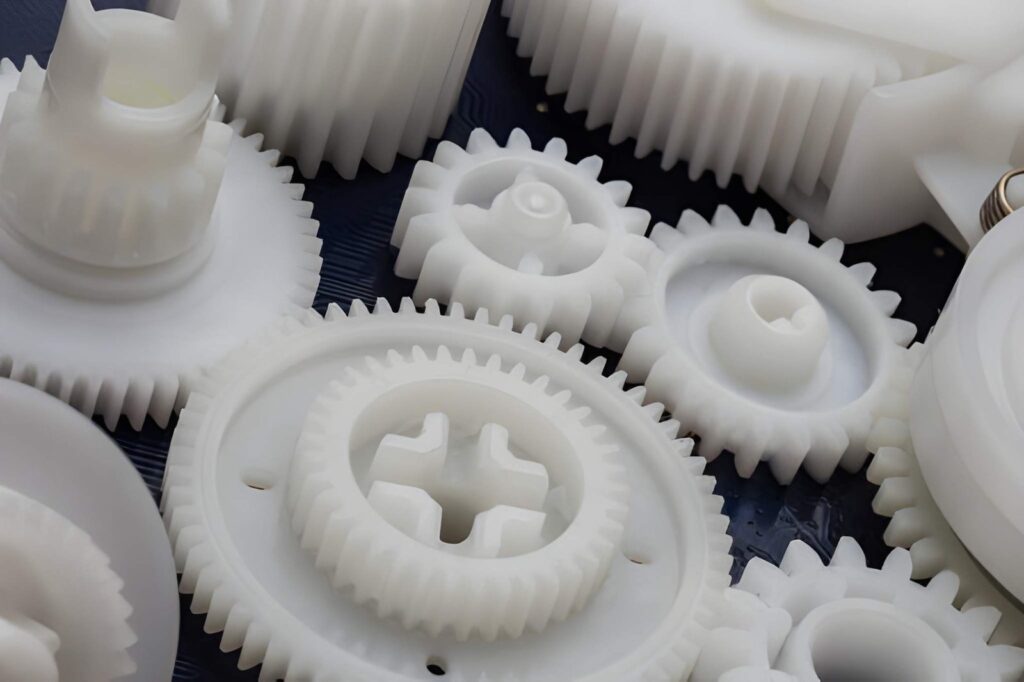
Machined plastic gears
CNC Plastic machining has a large variety of uses in various industries because of its accuracy, durability, and versatility.
All in all, CNC plastic machining provides a uniform quality, better tolerances, and custom solutions in all industries.
Plastic CNC machining offers high quality, repeatability, and accuracy in the manufacturing of complex components. It overcomes challenges in traditional manufacturing, delivering tight tolerances, smooth finishes, and consistent material performance. The plastics are used due to their lightweight, non-corrosive qualities, electrical insulation, low costs, and easy machining. The selection of the appropriate material entails the aspects of strength, thermal stability, machinability, environmental resistance, cost, and sustainability. CNC machining, industrial applications like milling, turning, drilling, and waterjet cutting, enable industries to shape their components precisely to the required specifications. They are employed in the medical, consumer products, automobile, aerospace, electronics, food processing, agricultural, and oil and gas industries, with components that are reliable, durable, and custom-made to the required specifications.
Unlock precise, durable, and high-quality plastic components with Apexrapid’s expert CNC machining services. Whether you need prototypes or full production runs, we handle a wide range of plastics with tight tolerances, smooth finishes, and consistent results.
Contact us today to get reliable, cost-effective, and custom-machined plastic parts intended for your exact specifications.
Most plastics can be machined, but performance varies by type. Softer plastics like polyethylene may deform or produce burrs during cutting, while tougher plastics like nylon or PEEK need sharp tools and controlled feed rates. Selecting the right cutting strategy for each material is essential to achieve clean, precise results.
Using proper tools and fixturing, tolerances of ±0.05 mm or better can be achieved, even with challenging plastics. This precision makes CNC machining reliable for medical, aerospace, and electronics applications.
Polyethylene (PE) is an affordable and easy-to-machine plastic. Its cost-effectiveness and good machining properties make it suitable for a wide range of applications, including wear strips, gears, and consumer products.

HDPE VS. PP: Strength, Machinability, and Applications

Brass Vs Copper for CNC Machining: Which Material Is Best

A Complete Guide to Aluminum Sheet Metal Fabrication

Deep Hole Drilling: What It Is & How It Is Done?

Rapid Prototyping: All About Process, Techniques, Pros & Challenges & More

All-Inclusive Guide to Laser Cutting Aluminum