Deep hole drilling is a critical process in precision manufacturing. It involves creating holes with a depth much greater than their diameter. It often exceeds a 10:1 ratio. Obtaining high accuracy in these holes is challenging due to chip evacuation, tool deflection, and thermal effects.
Engineers must carefully select drilling methods, tooling, and coolant systems. This will help maintain straightness, surface finish, and dimensional tolerances.
This process is widely used in aerospace, automotive, oil and gas, and hydraulic industries, where high-precision, deep cavities are required. Factors like material hardness, hole diameter, and depth-to-diameter ratio dictate the choice of drilling technique, whether it’s gun drilling, BTA (Boring and Trepanning Association), or specialized high-feed deep hole drills. Effective deep hole drilling requires a combination of process planning, machine rigidity, and controlled cutting parameters.
In this article, we will explore the principles, techniques, challenges, and optimization strategies for deep hole drilling.
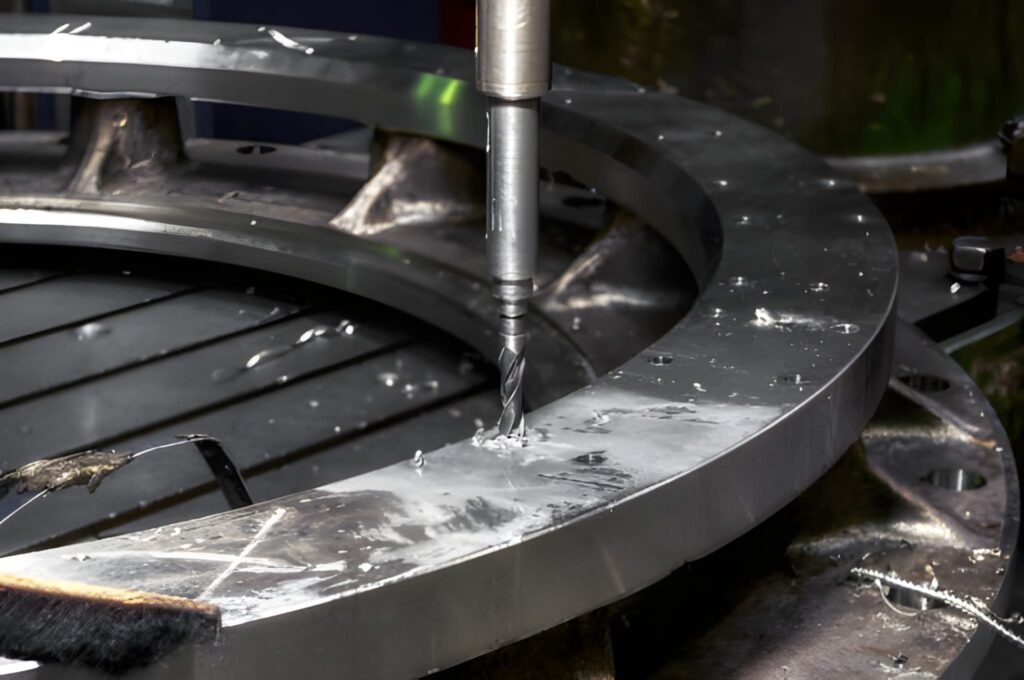
Drilling a Hole in a Large Metal Ring
Deep hole drilling consists of the excavation of holes far below the diameter. Normal depth-to-diameter ratio begins at 10:1. In high network applications, it may be 50:1 or more. Precision is critical. Any deflection or taper has an impact on part functionality.
The most widespread method is gun drilling. It involves a single-lip drill, and it is cooled internally. The chips are flushed using a drill to avoid clogging. A hollow tube is used in the drilling of BTA. Coolant is directed around the tool and removes chips. Both techniques have straightness and finish surfaces across extensive depths.
Among the common materials are hardened steel, titanium, and stainless steel. The wear of tools or the distortion of holes can occur due to heat and friction. The engineers have to regulate the feed rate, the spindle speed, and the pressure of coolant. At Apexrapid, we fine-tune these parameters to the minute. Its use is in hydraulic cylinders, aerospace engine blocks, and automotive fuel injectors.
Deep hole drilling digs holes with depths that are much deeper than the diameter. It involves accuracy, consistency of machines, and planning. The most important issues include tool deflection, chipping, and heat. Engineers have to optimise all the parameters of straightness, tolerance, and surface finish.
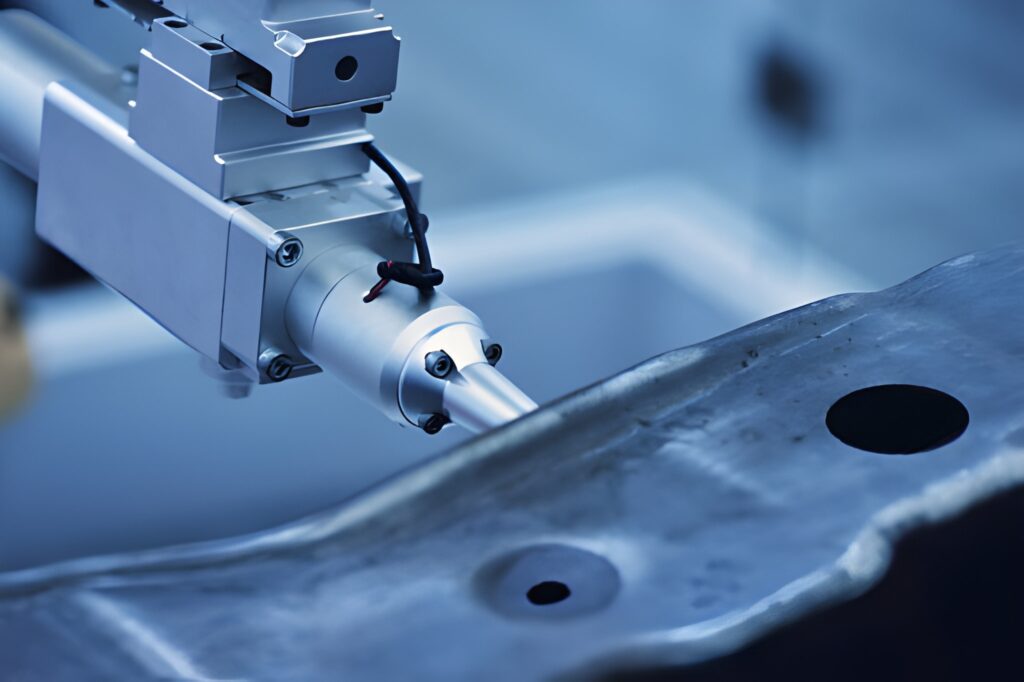
Gun Drilling
Gun drilling involves a long single lip drill having an internal coolant channel. The chips are flushed by the use of coolant. It can be used in holes as deep as 100 mm and same diameter of 2 mm to 50 mm in hydraulic components, fuel injection, and aerospace shafts. We apply gun drilling in hydraulic components, fuel injection, and aerospace shafts.
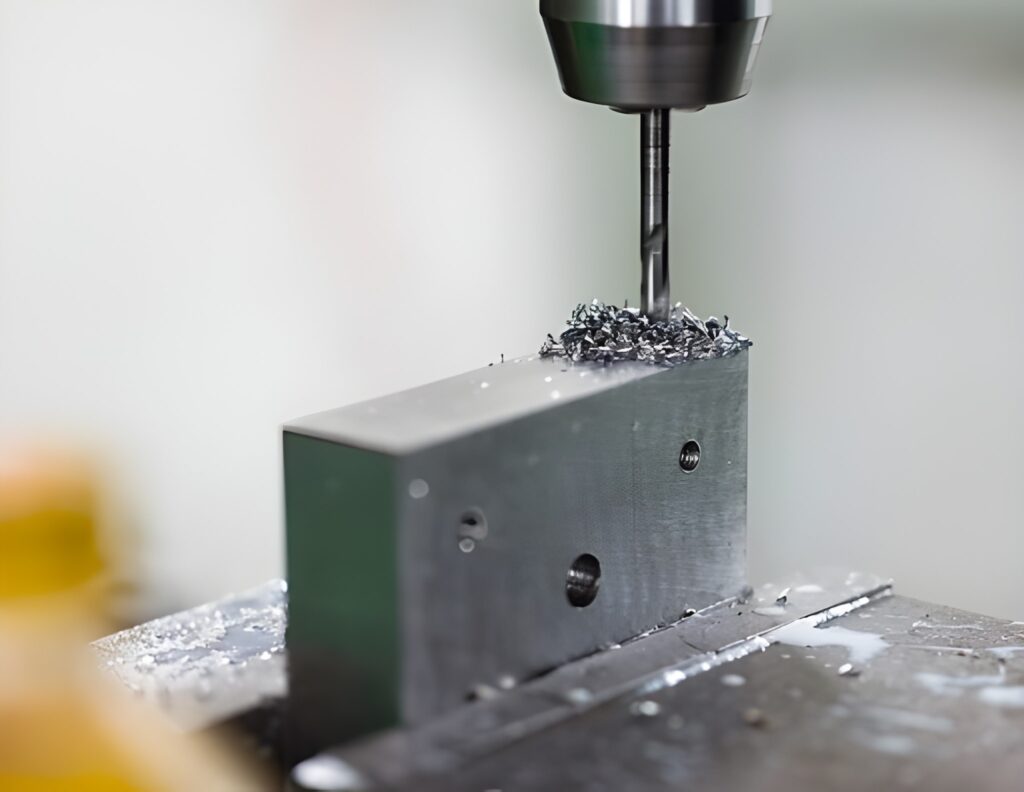
CNC Boring Machining
BTA drilling applies a hollow tube drill. An external flow of the coolant is experienced around the tool. Removal of chips is done via the tube. It is most effective in large diameters that are over 25 mm and in deep holes. It guarantees good surface quality and straightness in engine blocks of the automotive industry and large hydraulic cylinders.
One type of BTA is ejector drilling. It employs a two-tube design to isolate coolant and chip flow. It can be used in exceptionally deep holes and for high precision. It is used by engineers when there is a critical tolerance in oilfield and aerospace components.
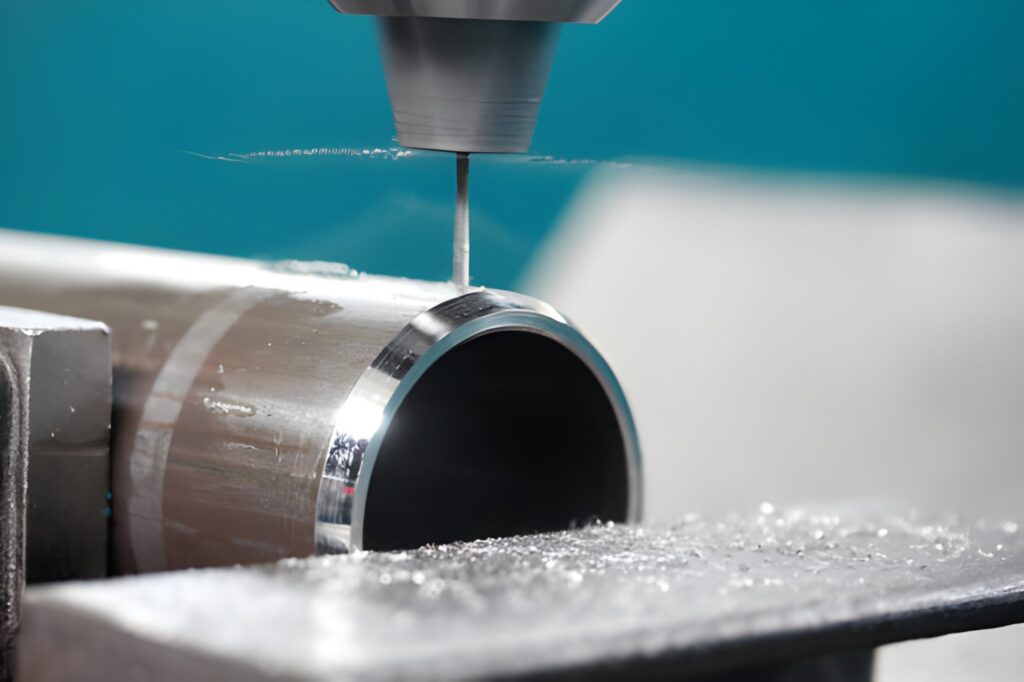
Single Lip Drilling
This technique employs a torsionless and continuous supply of coolant long and single lip drill. It obtains high straightness of small-diameter holes. It works well in hard metal and exotic alloy holes.
High-speed drill
High-speed drilling enhances the rate of feed and spindle velocity without reducing the volume of coolant flow. It minimizes the cycle time and must be carefully monitored. Our team uses high-speed deep drilling when rapid delivery of prototypes and low-volume production is needed; speed and accuracy are important.

Hole Drilling In Wood
There are special operations, such as trepanning and gun-boring hybrids for very large or complicated holes. The technique selected by engineers depends on the necessity of material, depth, diameter, and surface finish. All the steps demand optimization of tools, control of coolants, and machine stability.
The greatest challenge is being straight. Deep holes may be curved or sloping. Minor deflection influences tolerances and part functioning. The engineers should choose hard tools and adequate support.
Deep holes trap chips easily. Chipped tools and surfaces are diminished by clogged chips. There has to be a continuous flow of coolant and a good design of drills. Close attention should be paid by the engineers to the removal of chips.
Friction generates heat within the hole. Dimensions and surface finish are influenced by thermal expansion. The type of coolant and the control of pressure are vital. Overheating is avoided by the proper speed and feed.
Hard materials hasten the wear in the tools. Titanium, stainless steel, and superalloy reduce the life of the tool. Engineers are supposed to monitor wear and change tools at a specific time. Life is prolonged with coated or specialized drills.
Accuracy is influenced by vibrations and the inaccuracy of the spindles. Strong fixturing and a rigid machine minimize errors. Engineers have to maximize feed rates and cutting parameters. The drilling is done with stable configurations at our factory.
Unstable flow of chips and heat interferes with the finish. Of importance is the geometry of the tools and the coolants. The adjustment of feed and speed by engineers has to be done to meet specifications.
Tool stress is enhanced by hard or abrasive metals. The engineers have to trade off speed, feed, and tool life. Apexrapid streamlines the efficiency and quality parameters.
It is important to select an appropriate drill. Gun training, BTA training, or ejector training should be of equal depth and diameter of holes. Tool coatings reduce wear. The engineers have to choose the geometry of the chip flow and the straightness. Our team tailors each material with tools.
Coolant removes heat and chips. The pressure and flow rate should be optimized. Biodegradable or water-based fluids made of water cause less damage to the environment. Engineers continuously check the coolant so that there is no clogging or thermal expansion. We apply the superior coolant systems in accurate drilling.
Constantine machines minimize deflection and vibration. Workpiece movement is avoided by proper fixturing. Both the spindle speed and feed rate are optimized by engineers. We warrant the positioning and correctness of deep holes in setups.
Removal of chips constantly removes tool breakages. The chips are blown through the tool by gun drilling. BTA drilling drills out chips by the hollow tube. The technique used by engineers depends on the size of the hole, the material, and the depth. We control the flow of chips to maintain surface finish.
Spindle speed, feed rate, and depth per pass should be regulated. Tilting minimizes the wear and heat deformity of tools. Engineers compromise speed against precision. We use established parameter sets with every material.
Abrasive or hard metals demand lower feeds and tools. Hardness, thermal conductivity, and the size of the workpiece are considered by engineers. We prioritize conducting the test of materials and the modification of the drilling plan.
Tolerance and surface finish are maintained by regular inspection. Measurement of straightness, diameter, and roundness is done at intervals by the engineers. Our team incorporates inspection throughout the production to eliminate rework and ensure quality.
The most prevalent one is drilling. A rotary drill penetrates and cuts material to form a cylindrical hole. Applicable to the majority of metals, plastics, and composites. Applied in small and large holes, it is dependent on the quality of the tool and machine.
Milling Machine Making a Hole in Part
Milling involves a rotary cutter that is used to cut material and create holes. Best use of intricate forms, counterbores, or irregular designs. When drilling is not possible to achieve the necessary accuracy or form, engineers use milling.
EDM eliminates material by the use of electrical sparks. Fit tight holes or hard metals perfectly well. Used when the conventional cutting fails to cut through the material. Mold-making, often used in aerospace, medical parts.
Fiber Laser Cutting Machine
In laser drilling, a laser beam is used to vaporize the material. Most suitable for small holes or deep holes that require high precision. Applicable to metals, ceramics, or thin materials. Usually, in electronics and fuel injector components.
Water jet involves the utilization of high-pressure water or abrasive slurry to cut holes. There is no heat generation, hence the properties of materials remain intact. Applicable to plastics, composites, and heat-sensitive metals.
Mechanical punching is a method of cutting through a die and a punch. Works well for sheet metals. Very quick high-volume production, but with simple shapes of holes.
Tapping cleaves threads through a pre-drilled hole. Thread milling involves the use of a rotating tool to make accurate inside threads. Applied where threaded holes are required either to provide assembly or mechanical fastening.
Broaching reopens or releases holes that already exist with a tool that has teeth. Forms keyways, splines, or non-circular holes. Brooding is employed by engineers to make internal profiles of hydraulic, automotive, and mechanical components.
Deep hole drilling is used to make holes much deeper than their diameter. These holes often exceed a 10:1 depth-to-diameter ratio. Accuracy, straightness, and surface finish are key. Chip buildup, heat, and tool deflection make the process challenging.
The main methods are gun drilling, BTA drilling, ejector drilling, and single-lip deep hole drilling. Each method is chosen based on hole size, depth, and material. Some specialized techniques are used for very large or complex holes. Machine stability, coolant, and cutting settings must be carefully controlled.
In short, deep hole drilling is essential in industries like aerospace, automotive, hydraulics, and oilfield. Success comes from selecting the right method, careful planning, and consistent control. We ensures every part meets the highest standards.

HDPE VS. PP: Strength, Machinability, and Applications

Brass Vs Copper for CNC Machining: Which Material Is Best

CNC Plastic Machining: Plastic Selection, Machining Processes & Key Applications

A Complete Guide to Aluminum Sheet Metal Fabrication

Rapid Prototyping: All About Process, Techniques, Pros & Challenges & More

All-Inclusive Guide to Laser Cutting Aluminum